
Job Overview
Location: Hamilton, Ontario
Structure: Three-storey Victorian-era residential home with stone foundation
Problem: Early morning and evening attic noise consistent with squirrel activity
Service: Humane squirrel removal and attic exclusion
Visits: Three
Summary
Our team completed a multi-visit squirrel removal and exclusion service at a tall, older Victorian home in Hamilton. The issue was resolved through roof-level inspection, humane eviction using a one-way door, and targeted exclusion work at multiple vulnerable roof and soffit areas. A final follow-up visit confirmed no further wildlife activity.
Background / Property Context
The property was a three-storey, century-era Victorian home with steep roof lines and multiple roof-to-wall and soffit intersections. Due to the building height and roof pitch, access required two technicians and the use of roof jacks to safely inspect and complete work at elevated areas.
Customer Concern
The homeowner reported scratching and movement sounds in the ceiling during early mornings and late evenings. The timing and location of the activity suggested a squirrel had gained access to the attic space.
Inspection & Findings
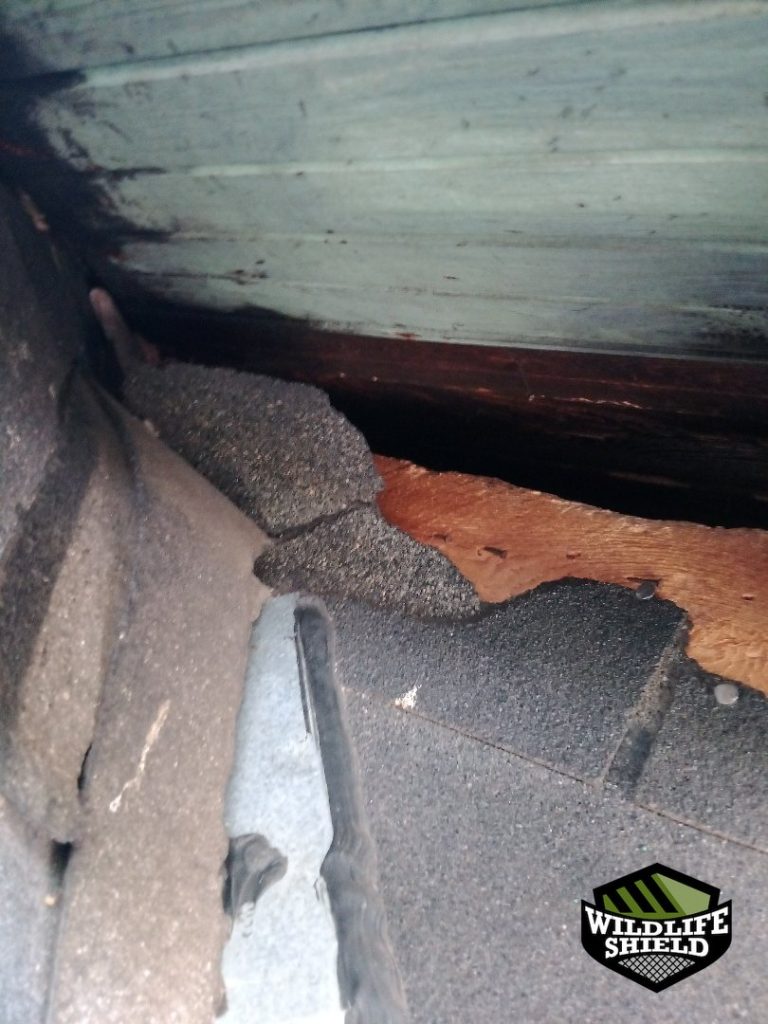
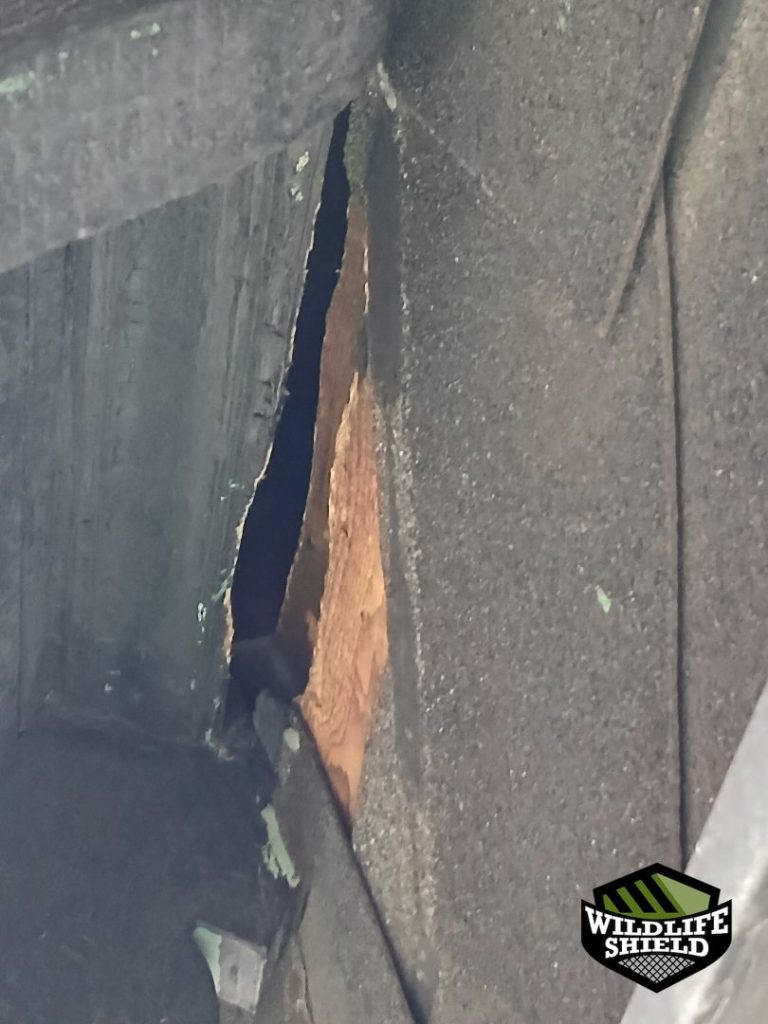
During the initial inspection, our technicians identified an active entry point at a roof-to-soffit intersection. The area showed visible gaps consistent with squirrel entry. Additional roof features, including plastic roof vents and extended soffit runs, were identified as secondary risk points for future access.
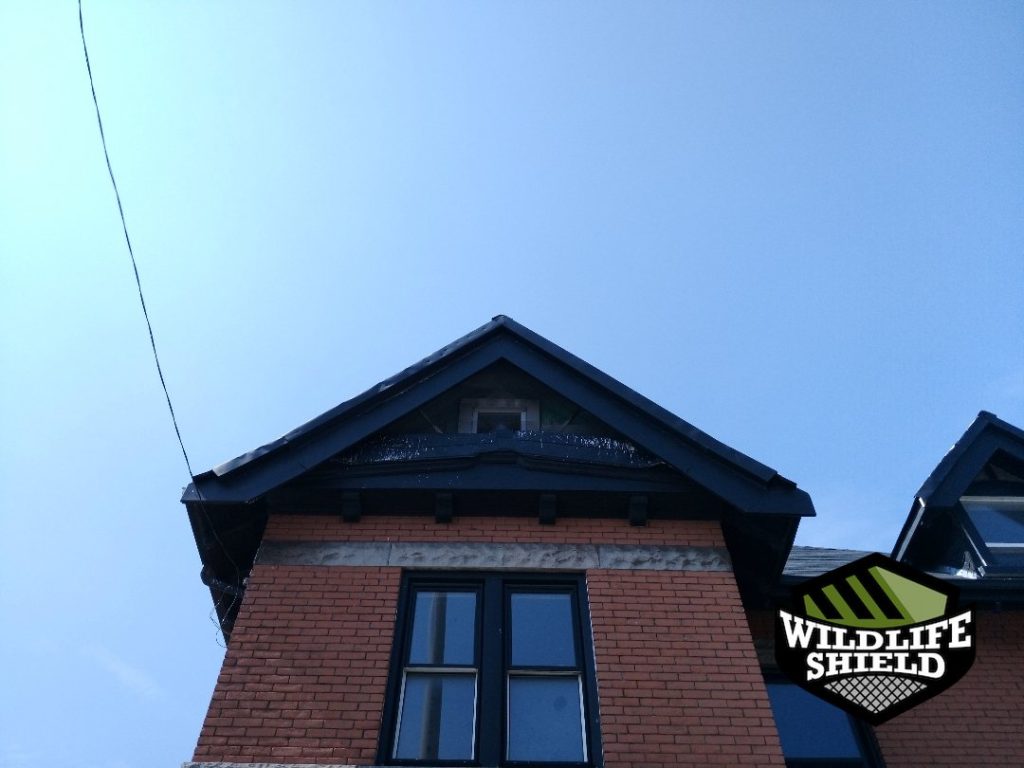
Photos from the inspection show:
- A roofline overview of the upper structure
- Open gaps at soffit and roof intersections exposing underlying wood
- Close-up views of damaged or separated roofing materials
Cause Analysis
Older Victorian homes often have complex roof designs with multiple intersections that can shift over time. Weather exposure and material aging can create small gaps that squirrels exploit, particularly at soffit lines and roof-wall junctions. The height and quiet attic space made the structure attractive for nesting.
Treatment / Removal
On the first visit, our team installed a one-way door at the primary entry point, allowing the squirrel to exit the attic humanely while preventing re-entry. This approach ensured non-lethal removal in accordance with humane wildlife control standards.
Exclusion & Repairs
Following removal, exclusion work was completed over multiple visits and included:
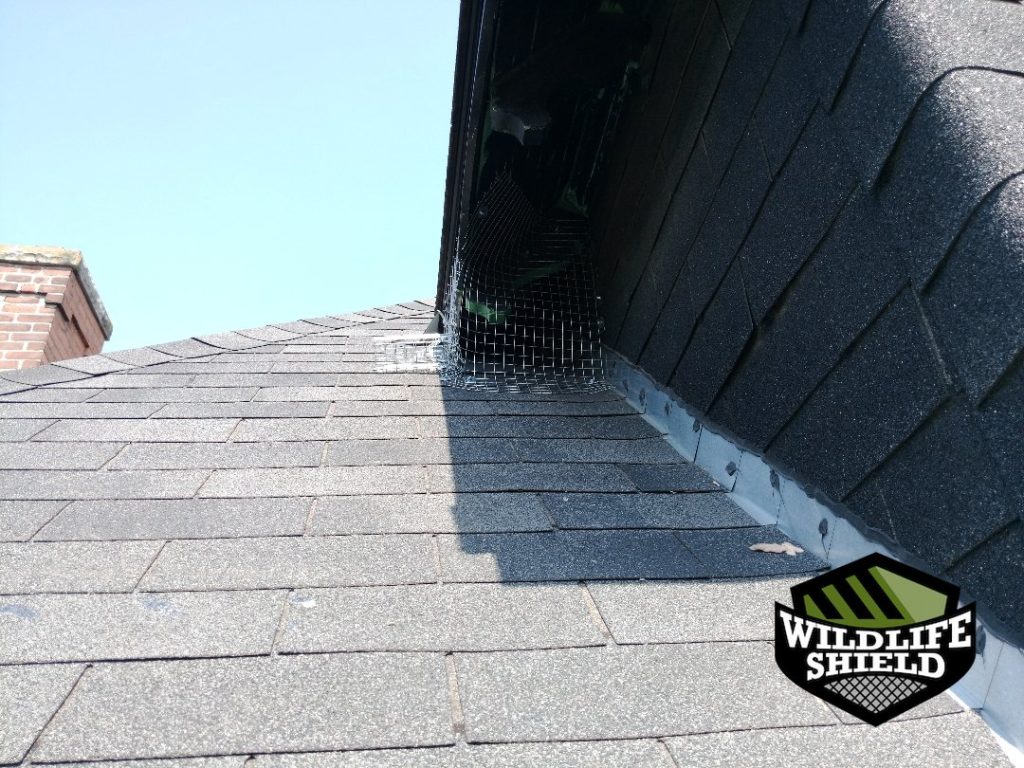
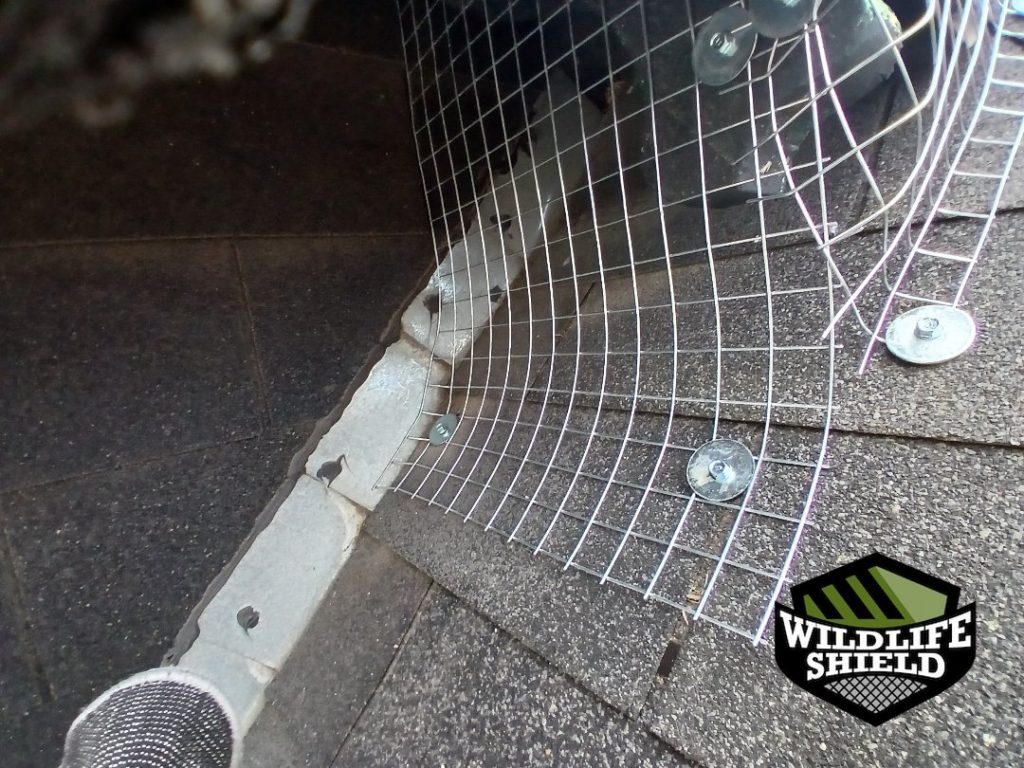
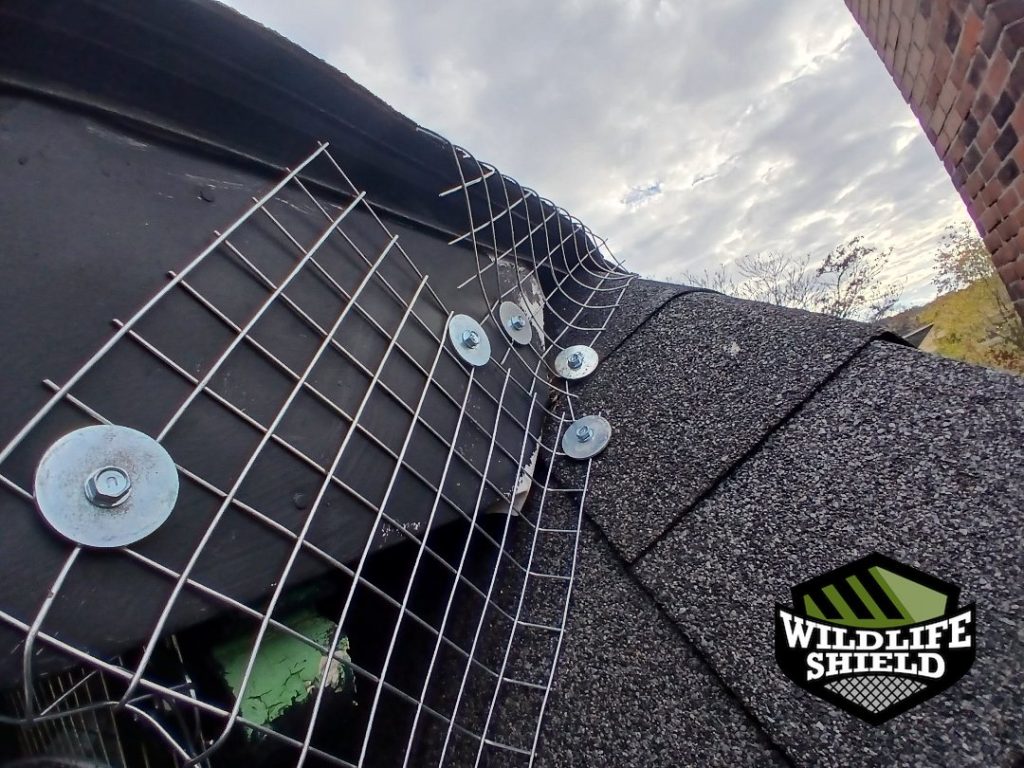
- Sealing approximately three feet of soffit intersection using galvanized steel mesh
- Applying caulking at roof-wall intersections to close smaller access gaps
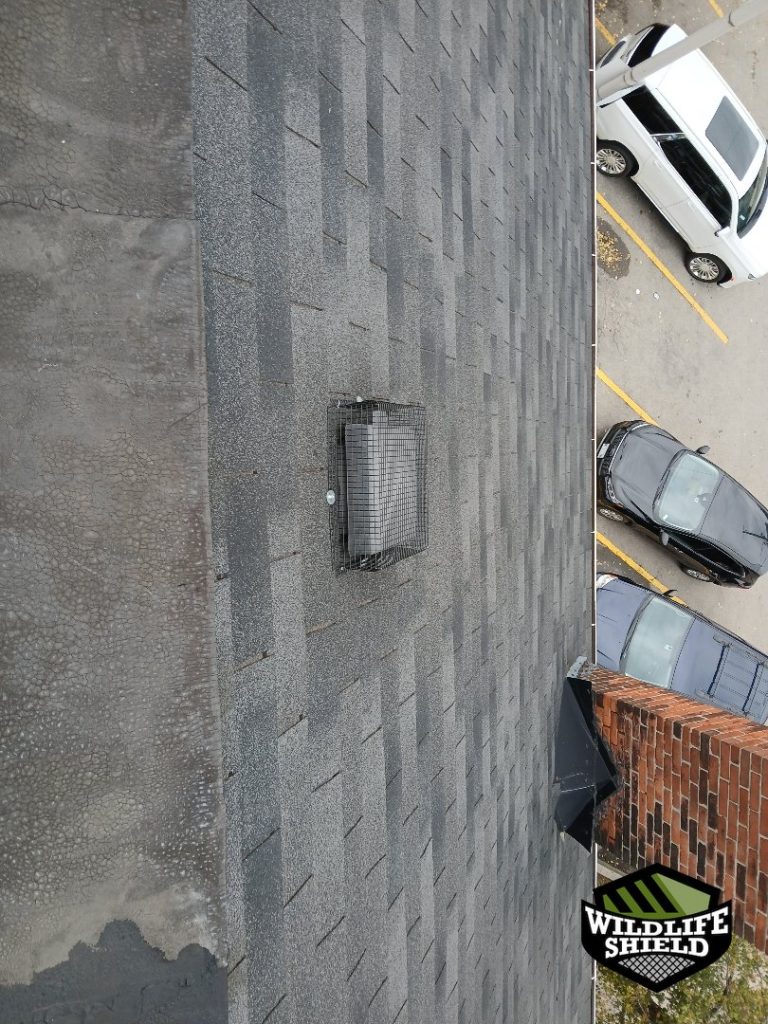
- Installing galvanized steel vent covers over three accessible plastic roof vents
- Sealing an additional five feet of soffit with galvanized steel mesh
Photos document the installed one-way door, vent screening, and completed mesh exclusions secured beneath roof shingles and along soffit edges.
Outcome & Confirmation
By the third visit, the homeowner reported no further noise or wildlife activity. The one-way door was removed, and a final inspection confirmed all exclusion materials remained secure with no signs of renewed entry. The attic remained inactive following completion of the service.
Technician Notes
The work was carried out by licensed wildlife technicians, with Andrew acting as lead during roof access and exclusion installation. Due to roof height and pitch, a second technician was present on-site for safety and efficiency. All work was completed using humane, non-lethal methods.
This work was completed by our Hamilton Wildlife removal team. For Wildlife removal inquiries in Hamilton, contact 905-581-9985.