
Job Overview
Location: Hamilton, Ontario
Structure: Two-storey detached century home
Problem: Squirrel activity reported in the attic during early morning hours
Service: Squirrel removal and full roofline exclusion
Visits: Three visits
Summary
We were contacted regarding ongoing attic noise consistent with squirrel activity. A multi-visit wildlife removal plan was required due to the age and condition of the roofline. The work focused on identifying all active and potential entry points, completing humane one-way exclusion, and permanently sealing vulnerable areas to prevent re-entry.
Background / Property Context
The property is an older, two-storey detached home with original roofline components and mixed building materials. Century homes commonly develop gaps along roof edges, soffits, and masonry interfaces as materials shift and deteriorate over time. These features can create repeated wildlife access points if not addressed comprehensively.
Customer Concern
The homeowner reported recurring early morning activity in the attic space. The timing and type of noise raised concerns about squirrels entering and exiting the roof area.
Inspection & Findings
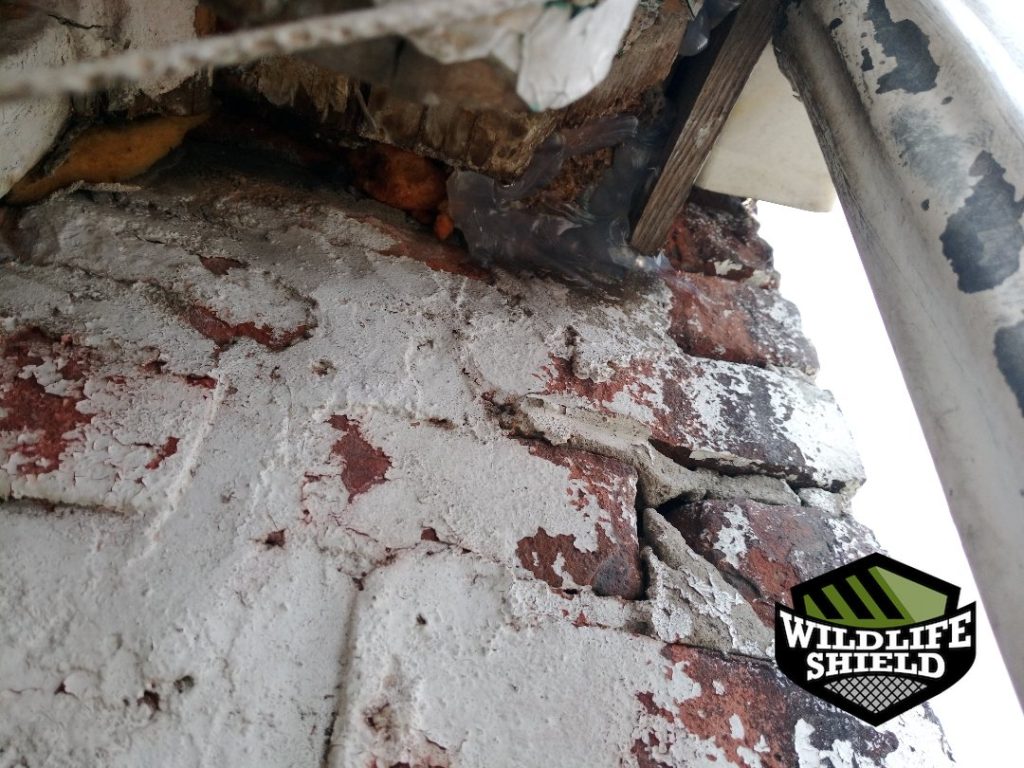
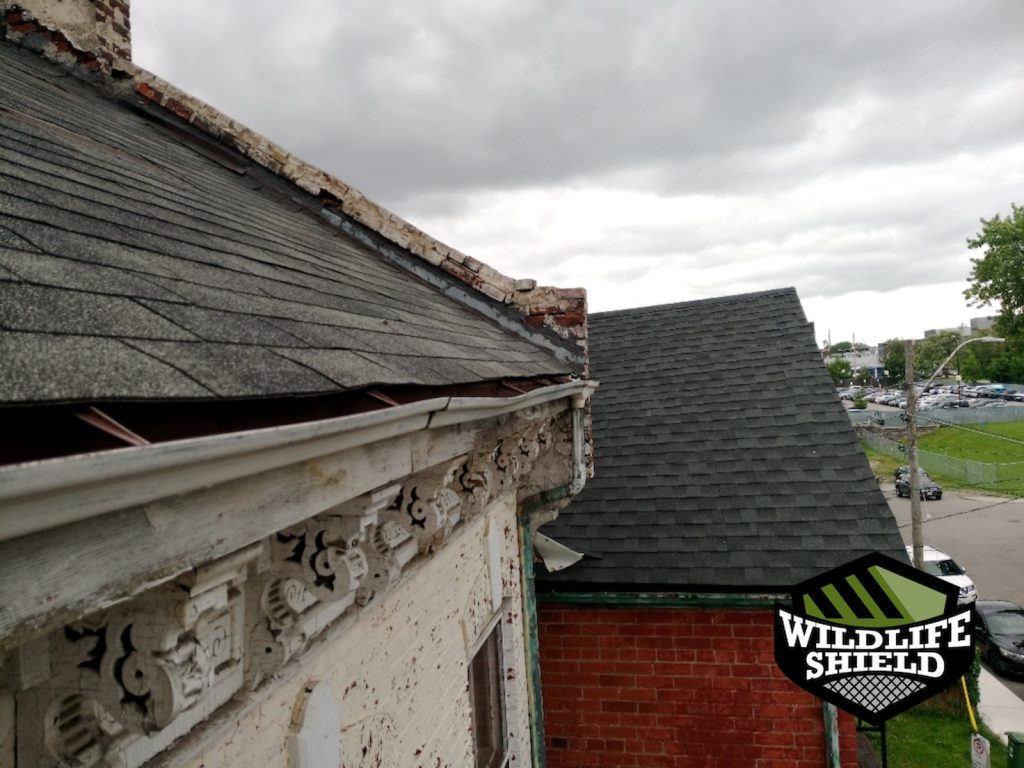
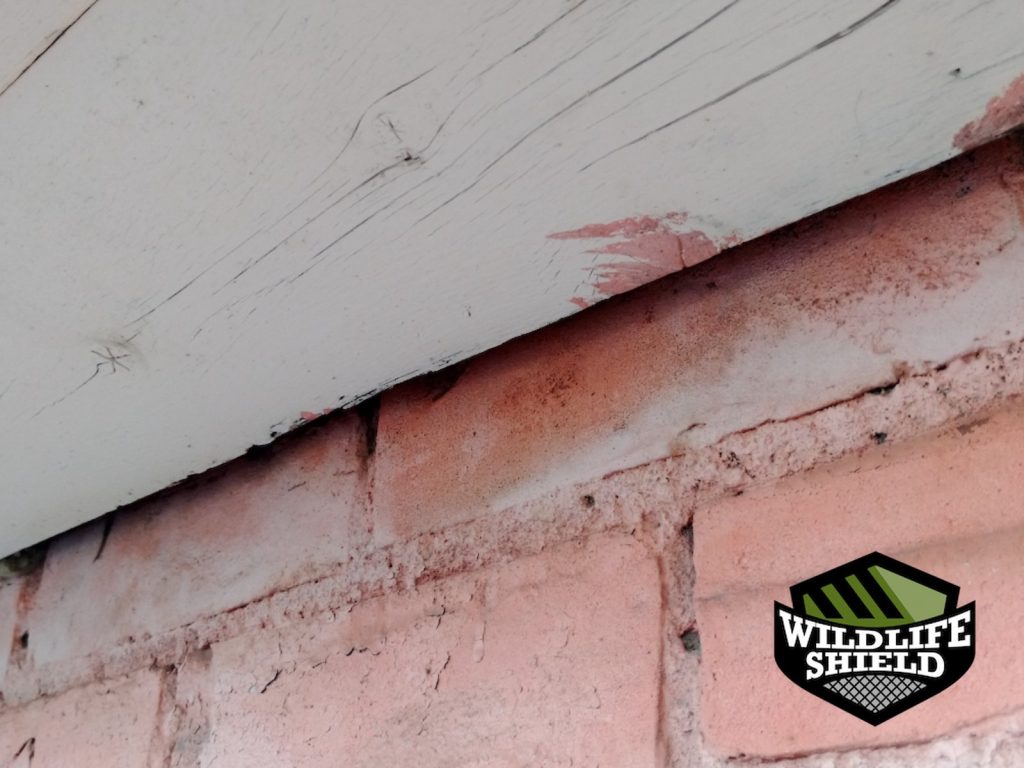
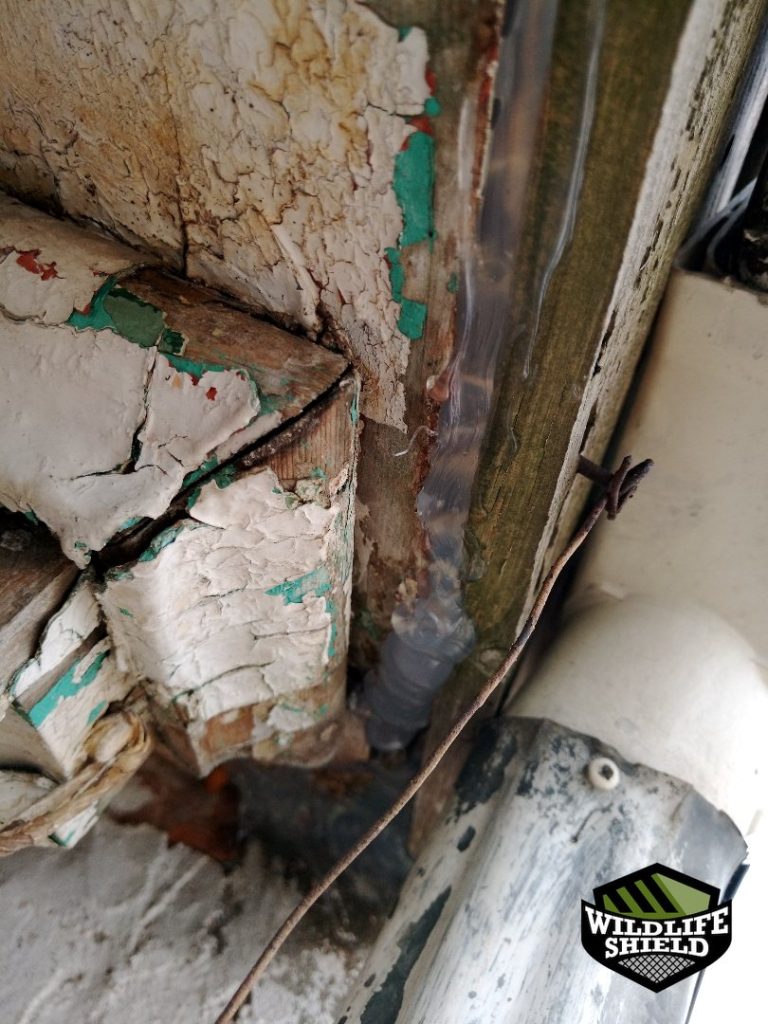
During the initial inspection, our team identified multiple access points along the roof edge, soffit intersections, roof vents, and an open chimney. Several sections of wood and masonry showed age-related deterioration, and the roof condition limited same-day exclusion work.
Photos from the inspection appear to show:
- Gaps along the roof edge and soffit line
- Open or unprotected roof and wall vents
- An uncapped chimney opening
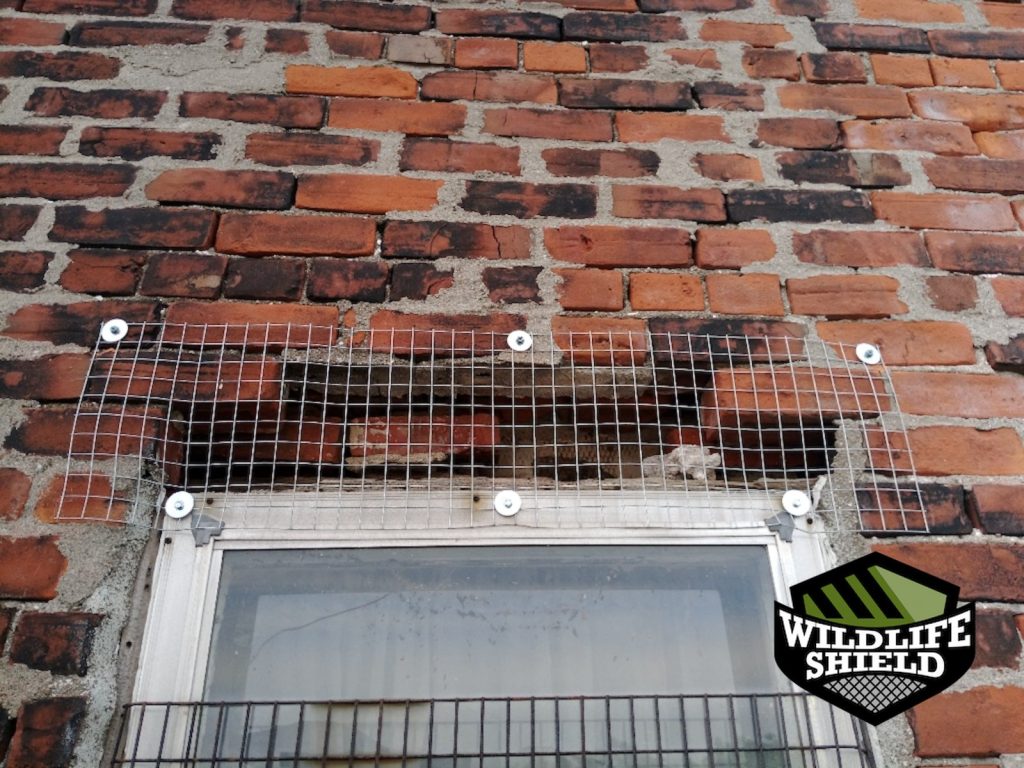
- Deteriorated wood and mortar at roof-to-wall transitions
Cause Analysis
Squirrels are attracted to elevated entry points that provide direct access to attic spaces. On this structure, aging roof materials and unsealed transitions created multiple access routes. Without sealing every viable opening, squirrels can continue to enter even if one point is addressed.
Treatment / Removal
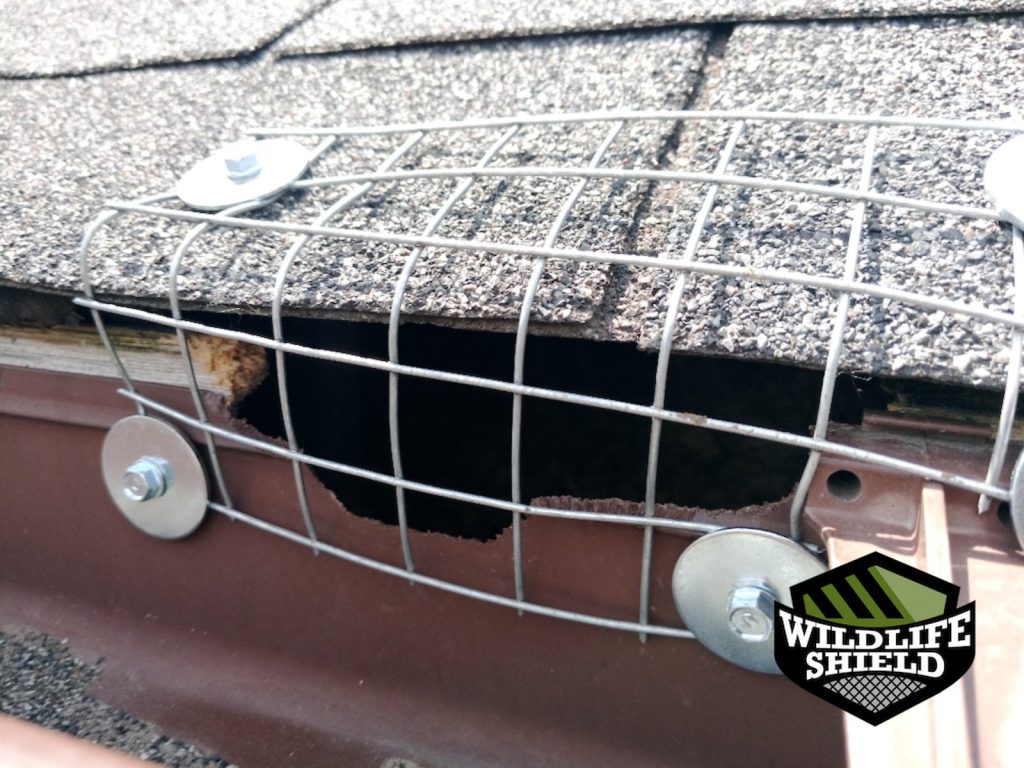
A humane exclusion approach was used. A one-way door was installed at an active soffit-to-roof intersection to allow squirrels to exit the attic without re-entry. This method ensures animals leave the structure safely and without harm.
Exclusion & Repairs
Once exclusion was in place, comprehensive sealing work was completed across the roofline:
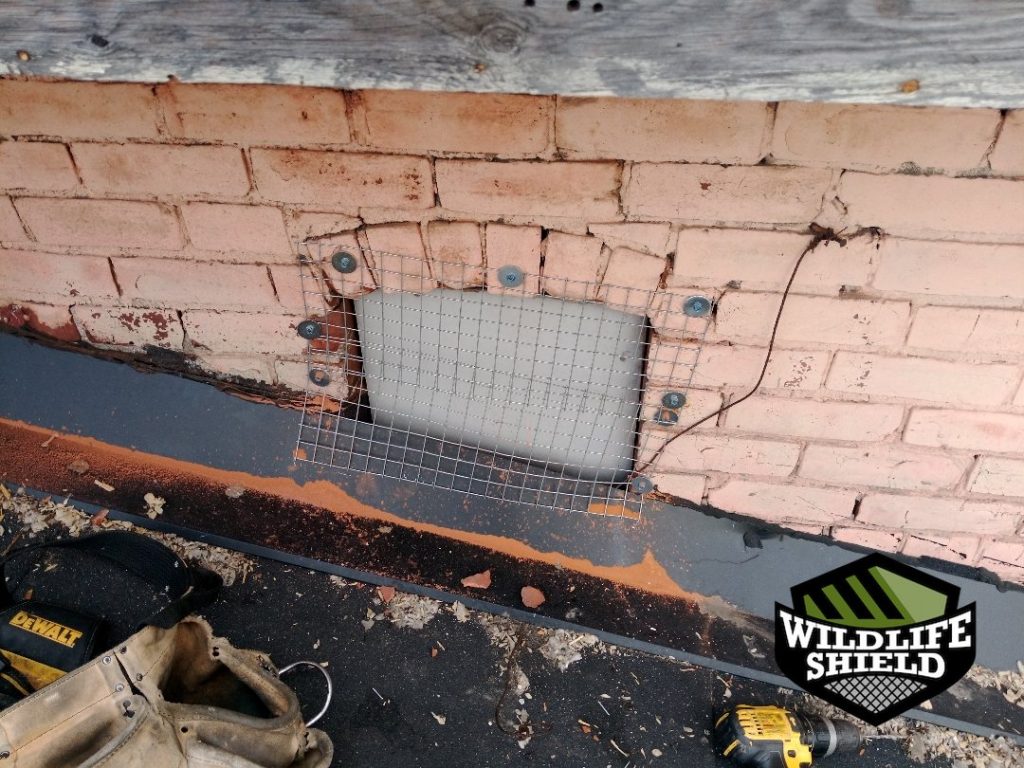
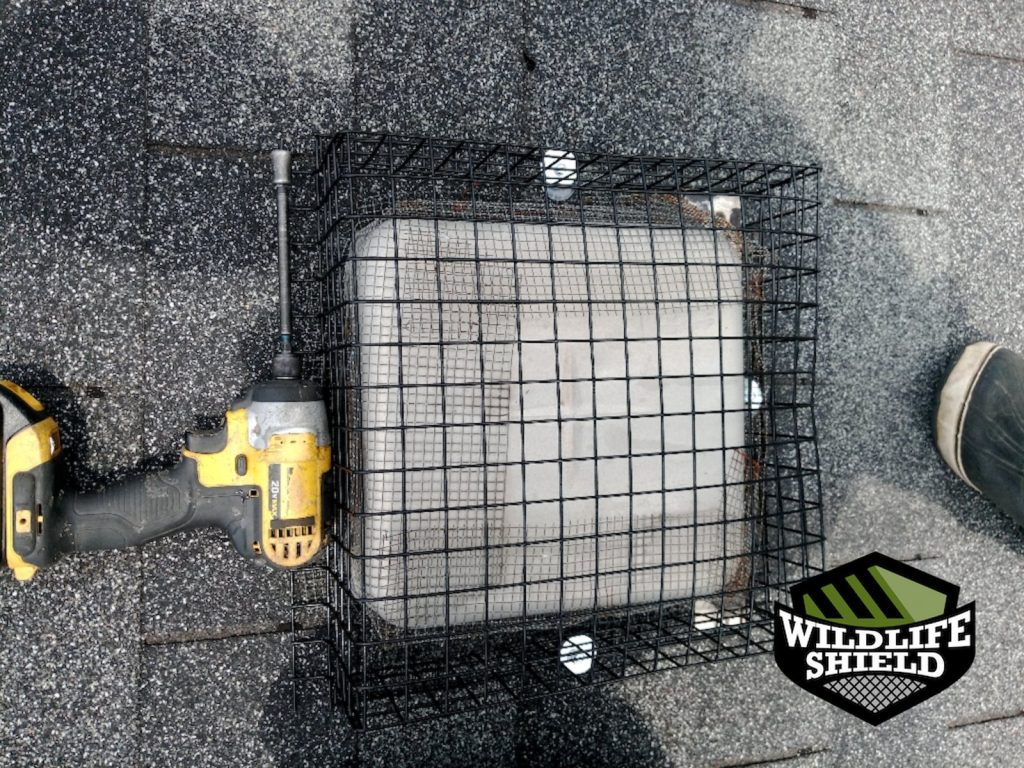
- Galvanized steel mesh installed over roof vents
- Galvanized steel mesh used to cap the open chimney
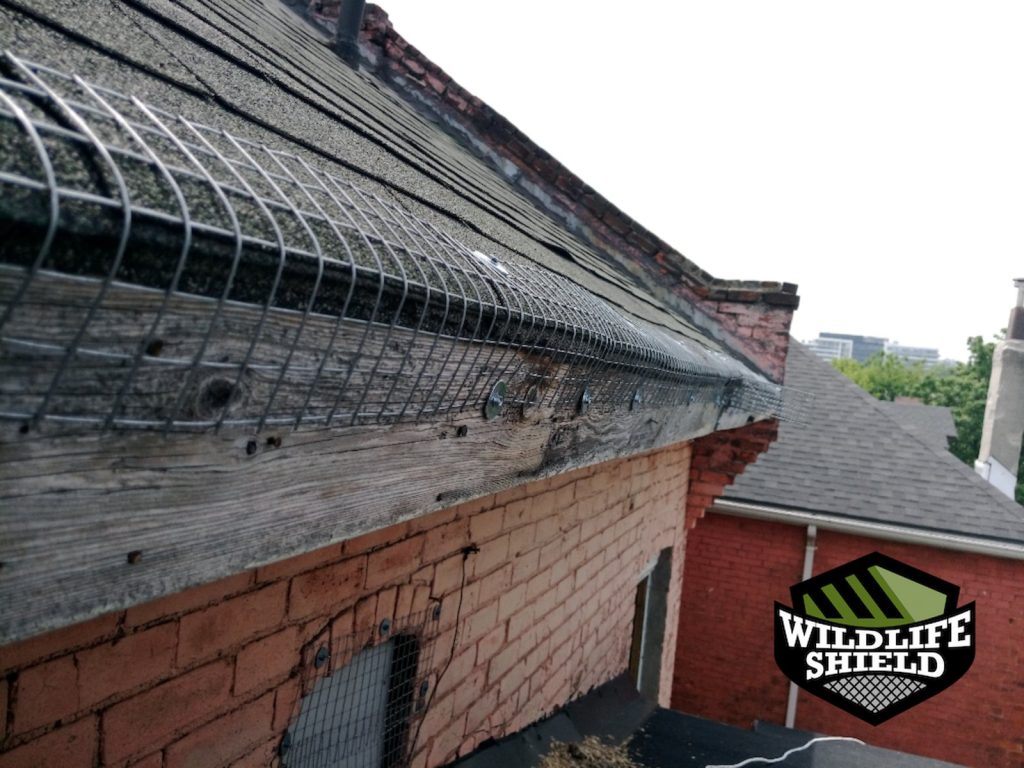
- Approximately fifteen feet of roof drip edge sealed with steel mesh
- Soffit wall gaps sealed using a combination of mesh and exterior-grade sealant
Due to roof conditions and working-at-heights requirements, a second technician assisted during this phase to ensure safe and thorough installation.
Outcome & Confirmation
On the final visit, the homeowner reported no further squirrel activity. The one-way door was removed, and all exclusion work was inspected and confirmed intact. No additional entry points or signs of activity were observed at that time.
Technician Notes
The initial inspection was completed by Andrew. Exclusion and sealing work required a two-technician crew due to roof condition and access limitations, with Shaohua assisting on-site. All work was completed using humane, non-lethal wildlife control methods appropriate for the structure.