
Job Overview
Location: Hamilton, Ontario
Structure: Semi-detached, two-storey house with second floor built into the roof
Problem: Squirrel activity in attic
Service: Humane squirrel removal and roofline exclusion
Visits: 3
Summary
Pest Control Hamilton addressed reported attic activity consistent with squirrels by identifying roofline entry points, installing humane one-way doors, and completing staged exclusion work across multiple visits. Final confirmation showed no further wildlife activity following door removal and inspection.
Background / Property Context
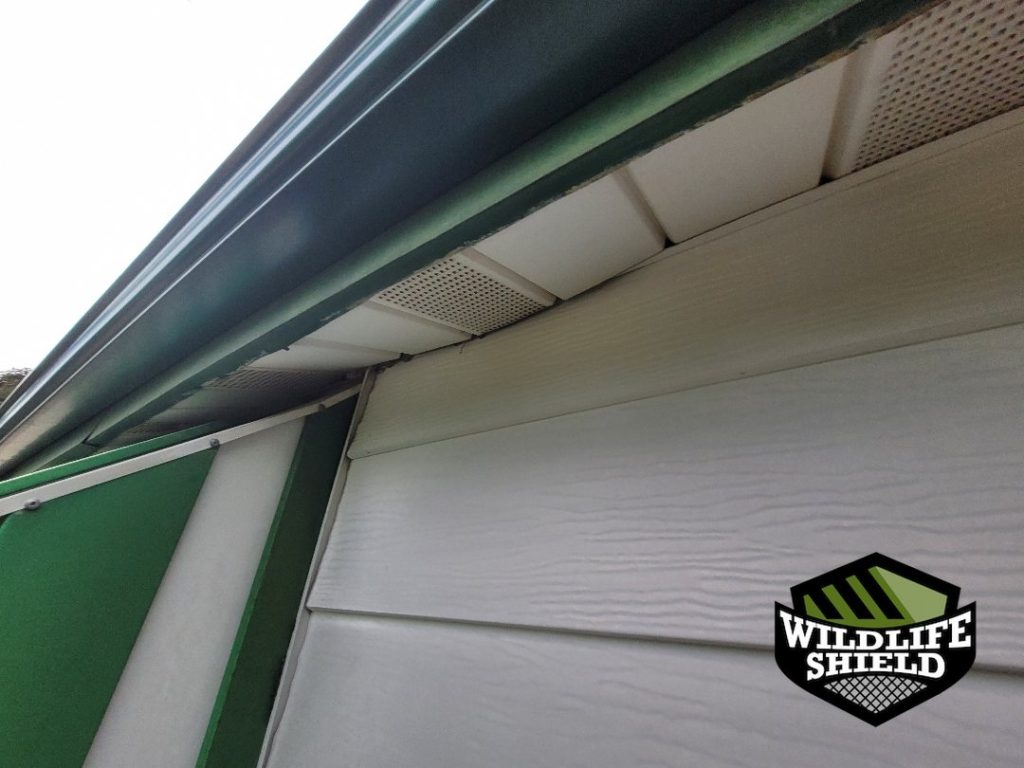
The property is a semi-detached home with complex roof geometry, including soffit intersections and multiple roof penetrations. These features can create concealed gaps along the roofline that wildlife may exploit for attic access.
Customer Concern
The homeowner reported scratching sounds in the ceiling during early morning and late evening hours, a pattern commonly associated with squirrel movement in attic spaces.
Inspection & Findings
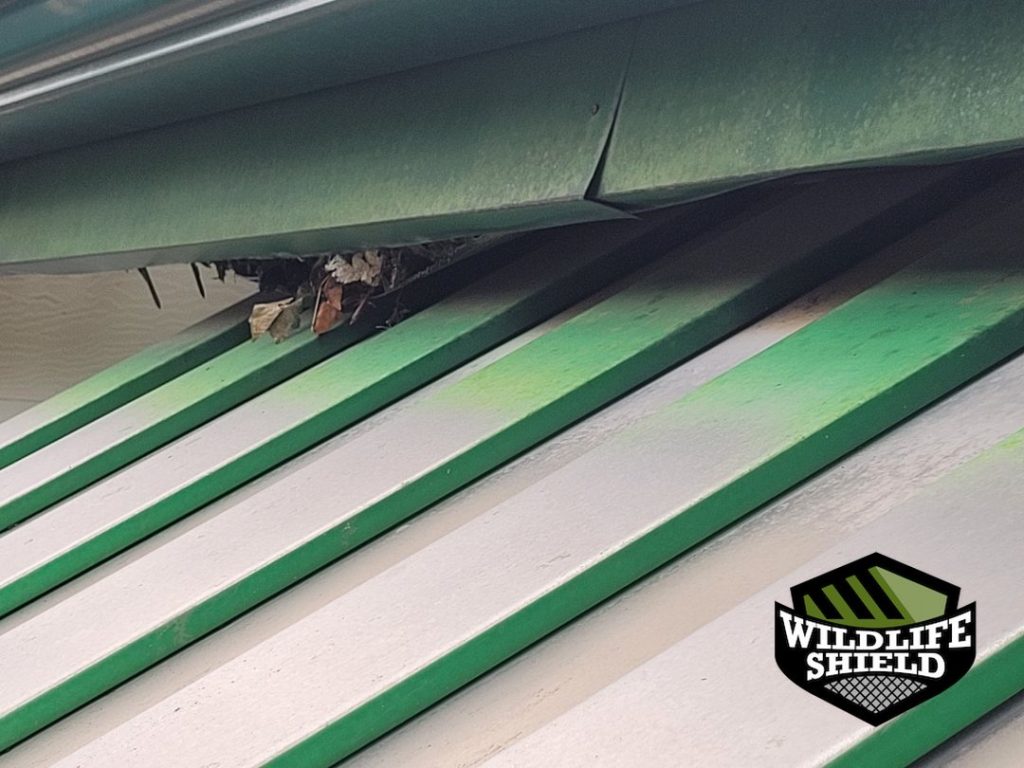
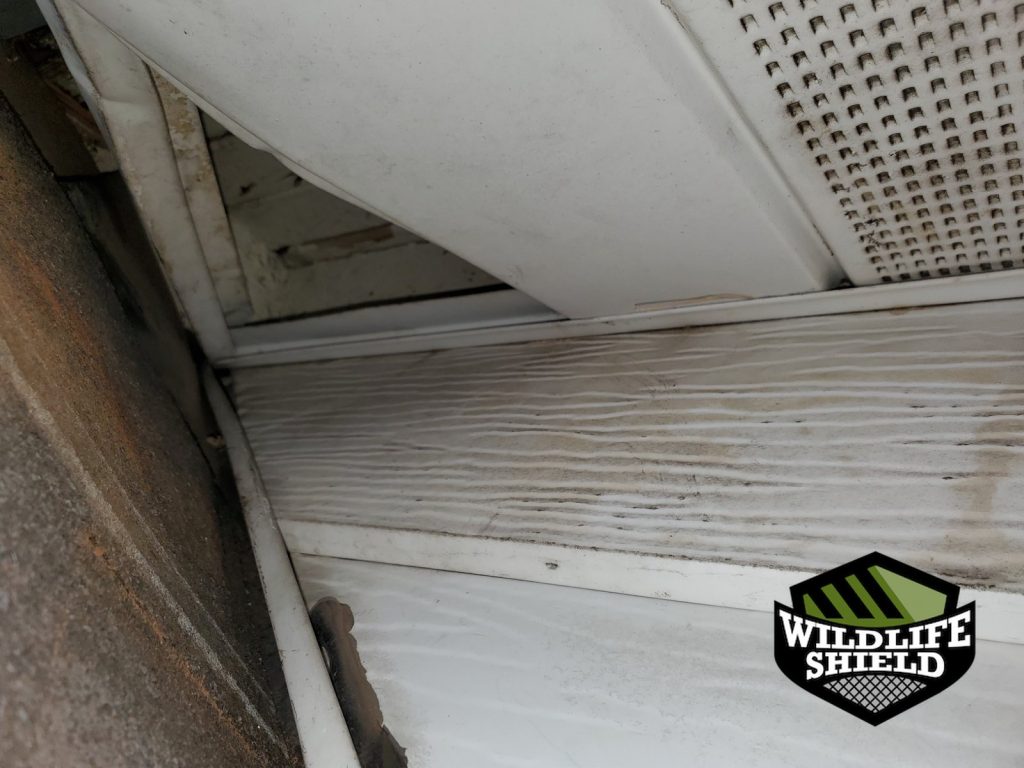
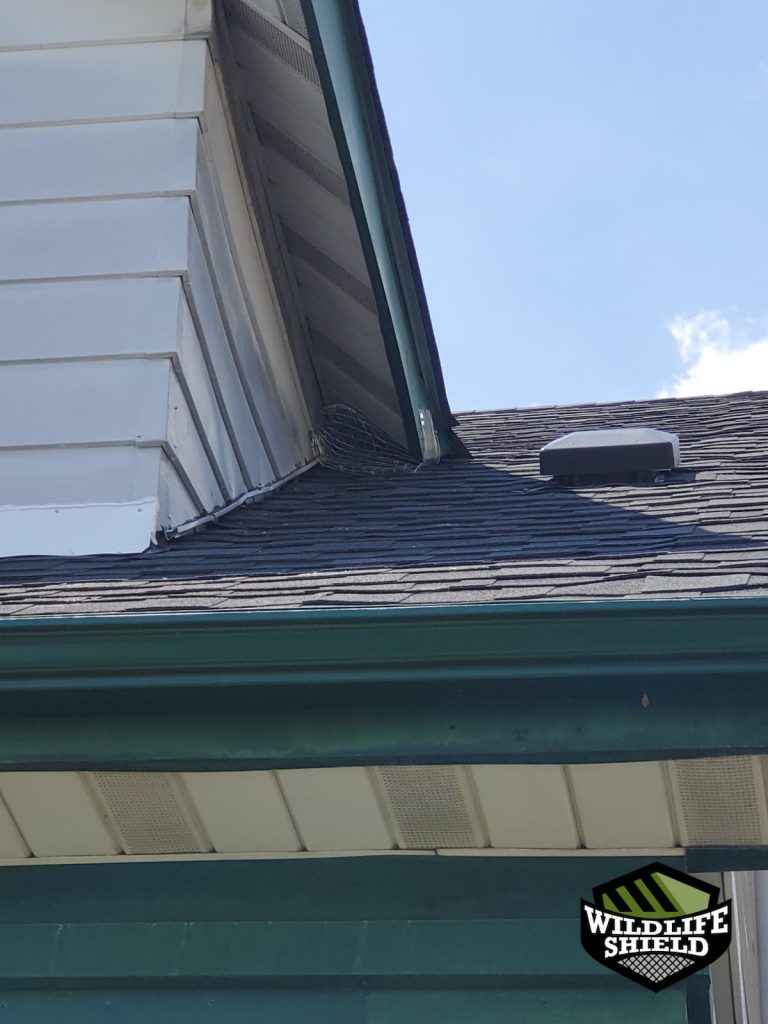
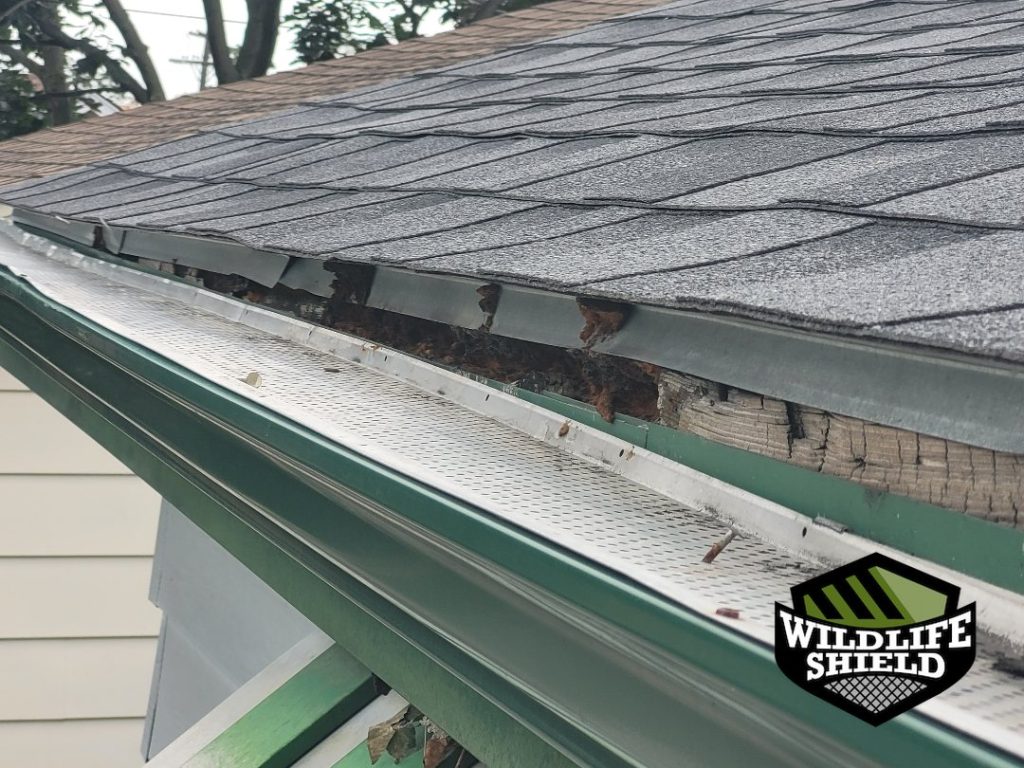
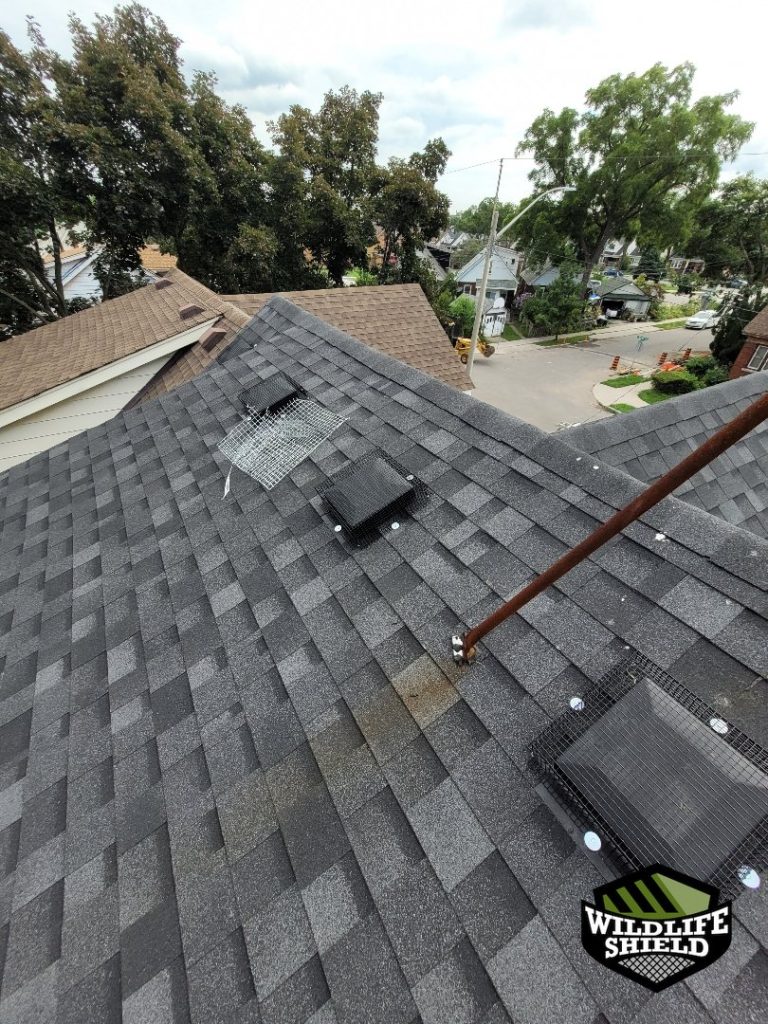
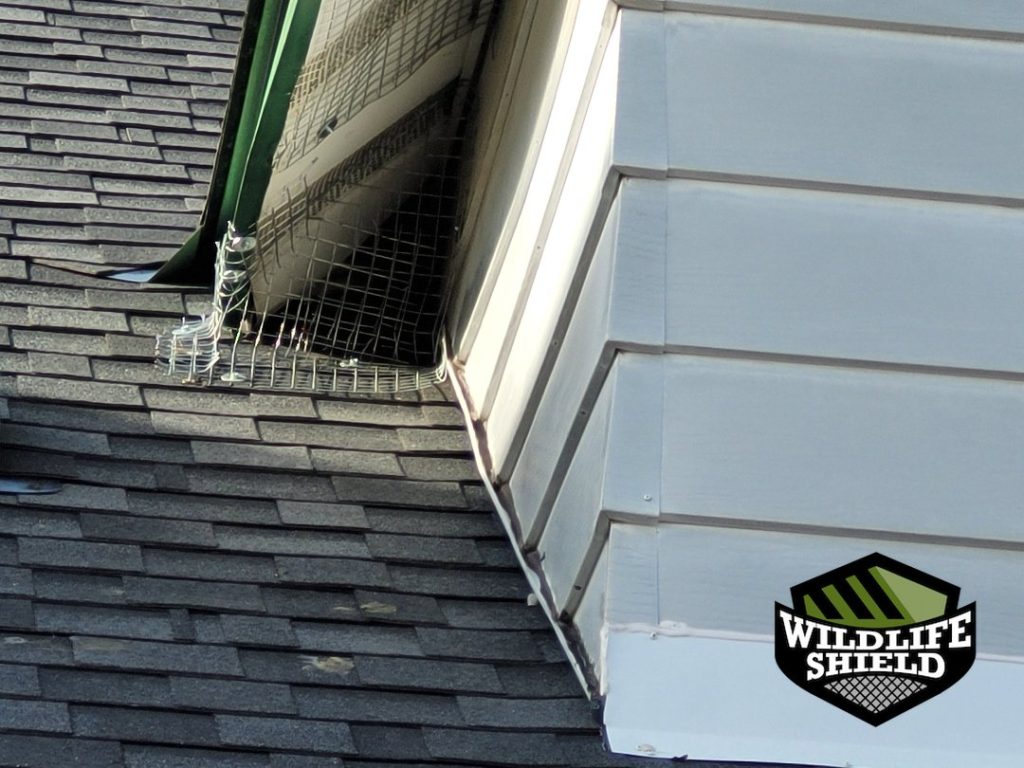
During the initial roof inspection, our team identified a primary entry point at a roof–soffit intersection. Additional vulnerable areas were noted along soffit intersections, roof vents, and the drip edge. Photos show open or previously compromised soffit gaps, roofline transitions, and exposed vent structures that could allow attic access.
Cause Analysis
Squirrels commonly target elevated rooflines where soffits meet roof decking, as these areas provide cover and direct access to attic voids. Aging materials, roof intersections, and multiple penetrations increased the likelihood of entry. The home’s roof-integrated second floor further concentrated access points along the upper structure.
Treatment / Removal
All wildlife work was completed humanely and non-lethally.
- One-way doors were installed to allow squirrels to exit the attic naturally while preventing re-entry.
- During the second visit, an additional one-way door was installed after continued activity was reported, addressing secondary access points.
Exclusion & Repairs
Exclusion work was completed in phases and included:
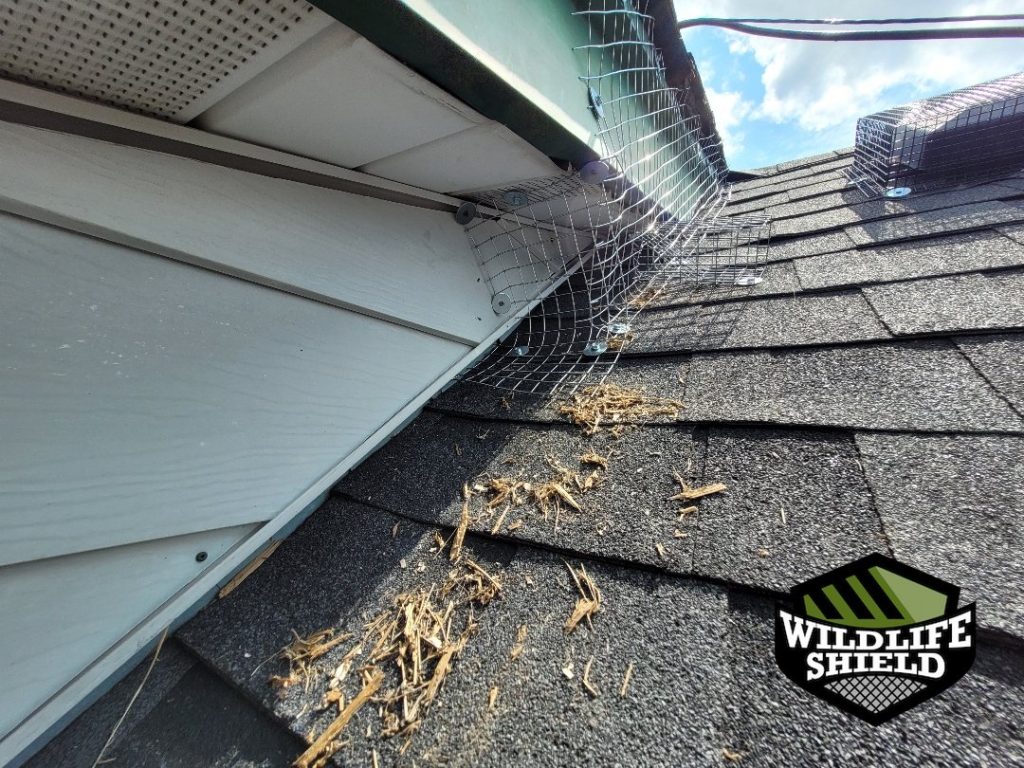
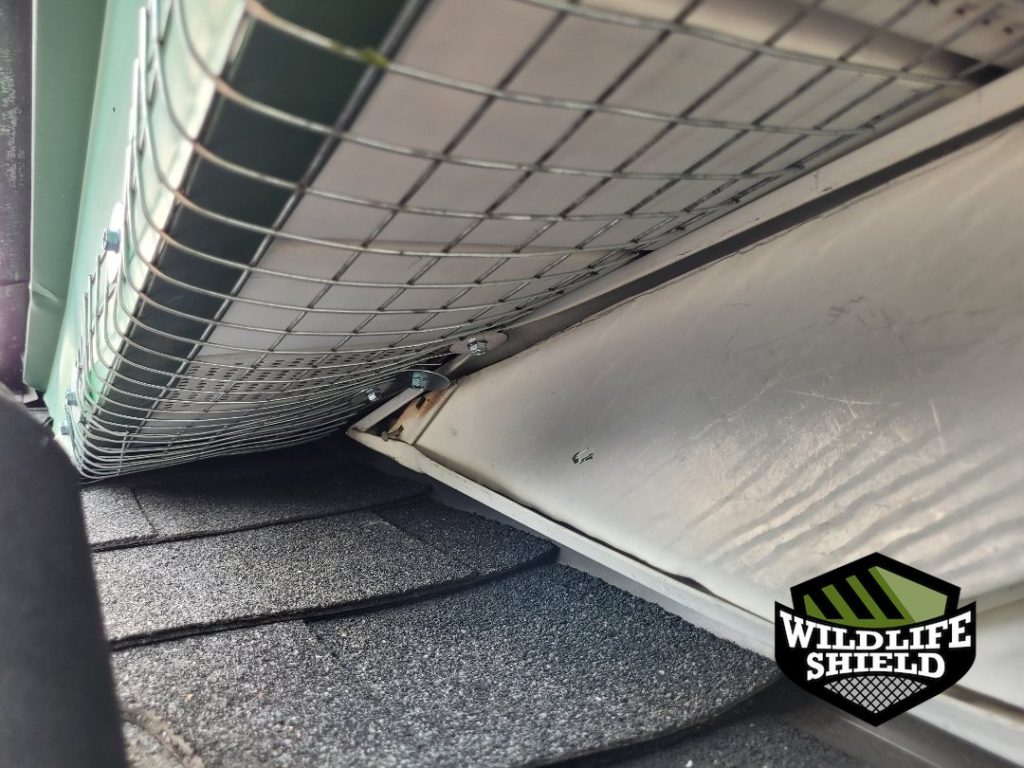
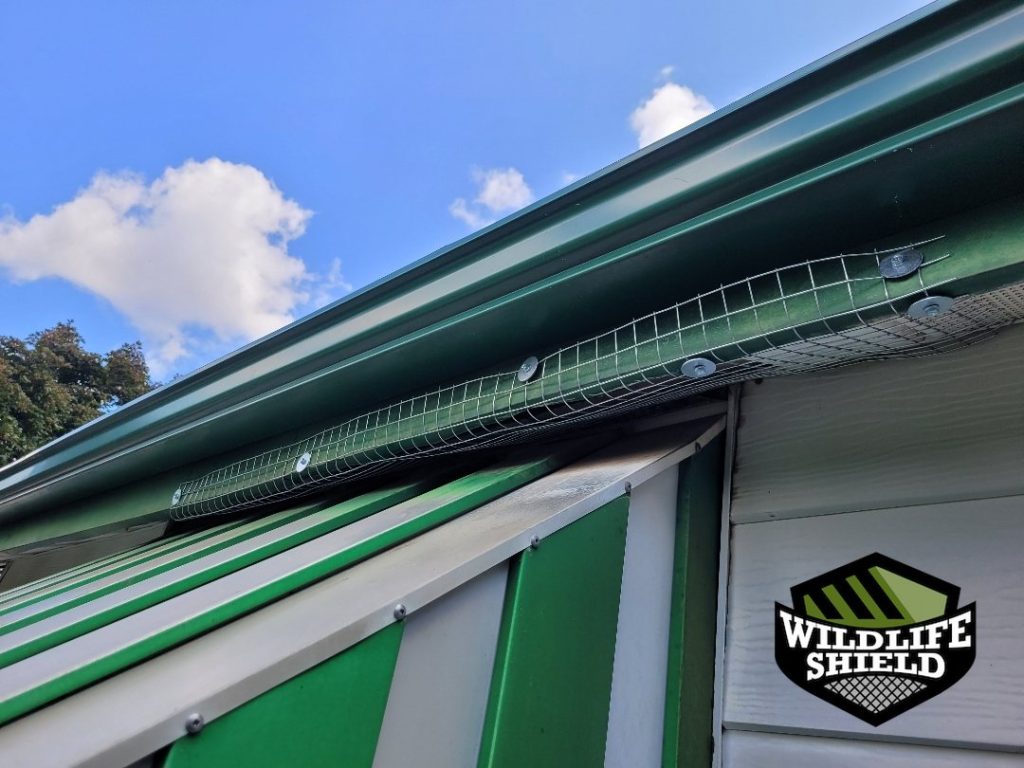
- Sealing approximately one foot of soffit and seven feet of soffit intersection with galvanized steel mesh.
- Installing galvanized steel vent cages over five accessible plastic roof vents.
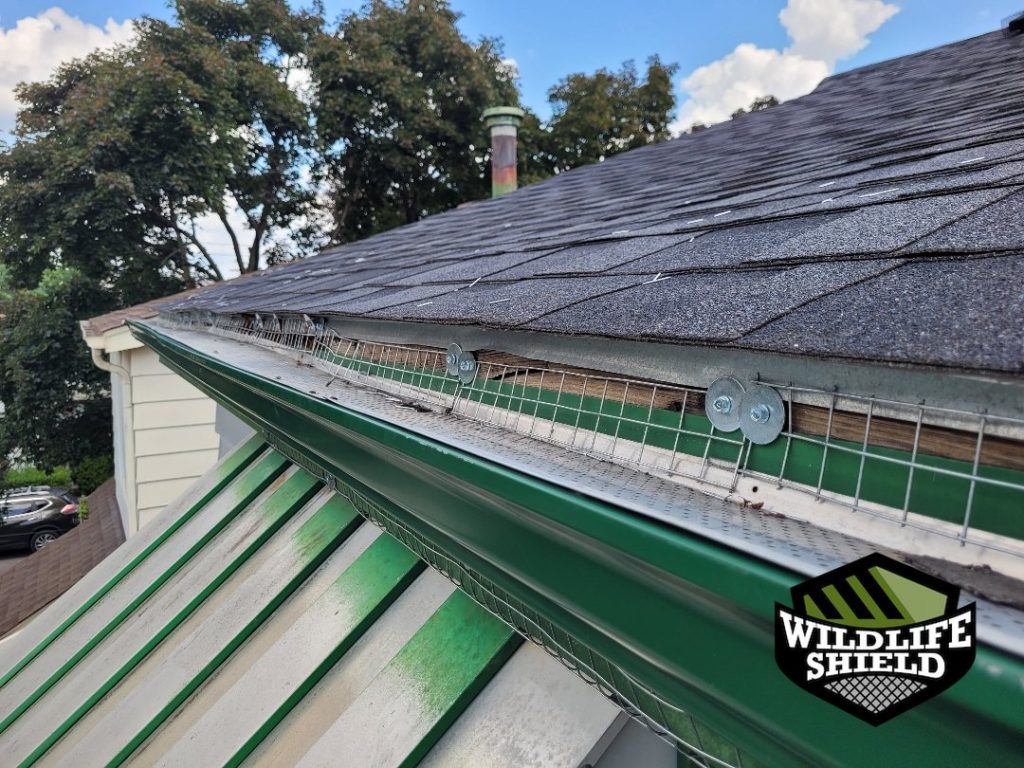
- Installing approximately twelve feet of galvanized steel mesh along the drip edge.
- Adding flashing over vulnerable soffit areas to reinforce transitions.
Photos show galvanized mesh and vent screening securely fastened along roof edges, soffit intersections, and vents, with materials shaped to follow roof contours.
Outcome & Confirmation
On the final visit, the homeowner reported no further attic activity. The one-way doors were removed, and all exclusion areas were inspected. No signs of continued wildlife access were observed, and the issue was considered resolved at the time of service completion.
Technician Notes
The final inspection was completed by Andrew, who confirmed that all exclusion materials remained intact and that no new entry points were present. Access limitations were typical of roof-level work but did not prevent full inspection of identified risk areas.
This work was completed by our Hamilton Wildlife removal team. For Wildlife removal inquiries in Hamilton, contact 905-581-9985.