
Job Overview
Location: Hamilton, Ontario
Structure: Detached bungalow with raised basement
Problem: Raccocoon activity reported in the attic during nighttime hours
Service: Raccoon removal and roof-level exclusion
Visits: 4
Summary
We were called to address repeated attic activity consistent with raccoon entry at a detached bungalow in Hamilton. Our team completed a full roof inspection, installed humane one-way doors, and implemented comprehensive exclusion at roof and wall vents. Follow-up visits confirmed resolution, with a later return two years afterward to address a new entry at an unprotected vent and complete full sealing.
Background / Property Context
The property is a detached bungalow with a raised basement and multiple roof penetrations, including roof vents, wall vents, and a masonry chimney. Mature trees and roofline access points created conditions where roof components were reachable by climbing wildlife.
Customer Concern
The homeowner reported loud movement in the attic late at night, which is commonly associated with raccoon activity. The concern was potential damage to the roof and attic if access was not addressed.
Inspection & Findings
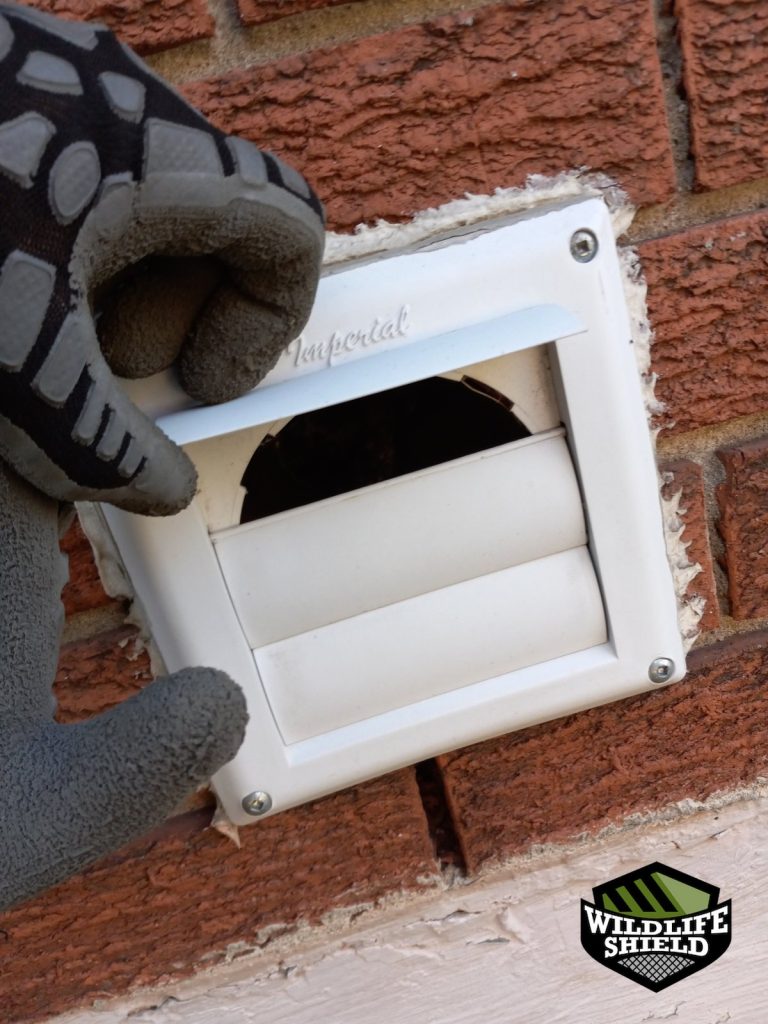
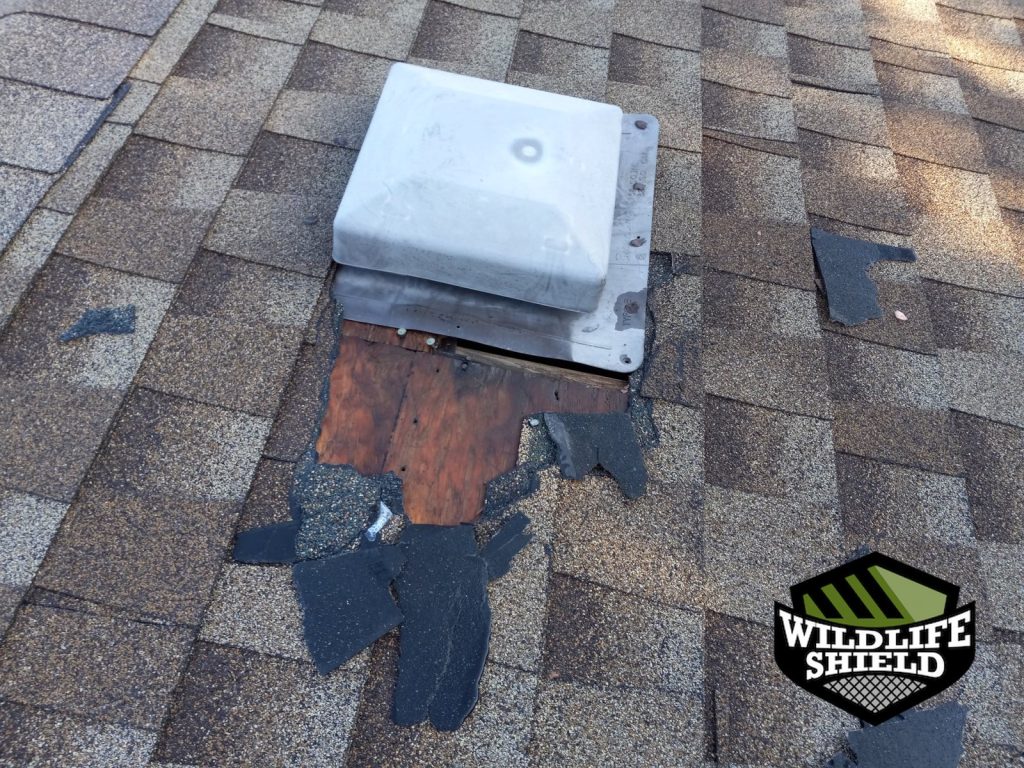
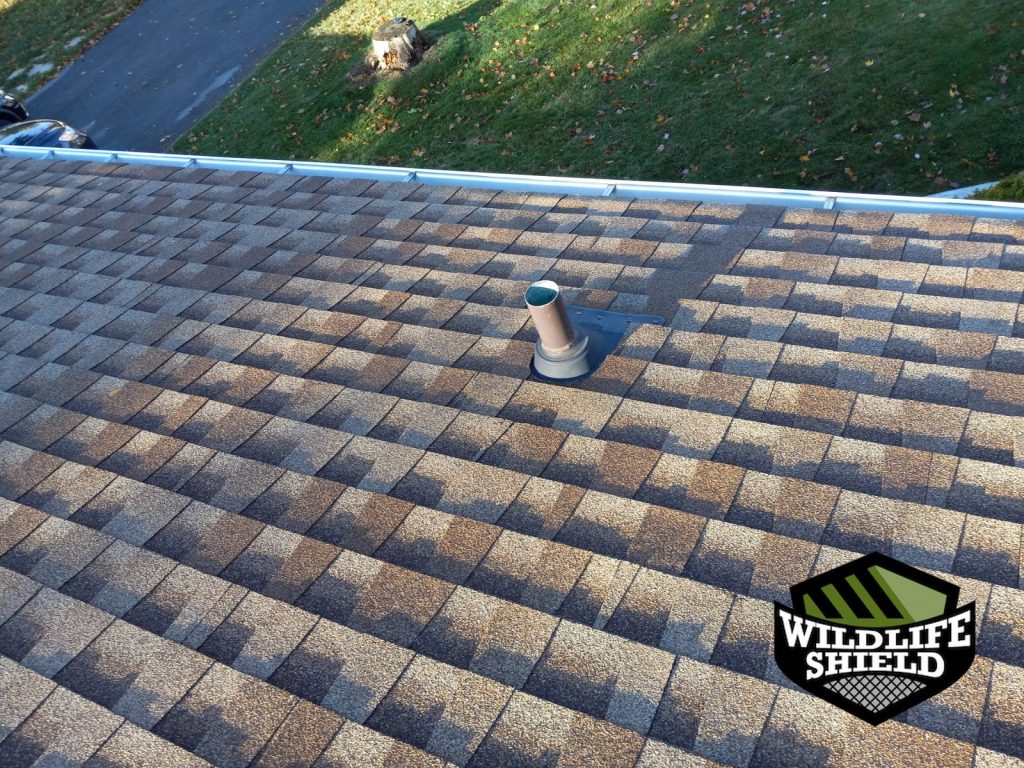
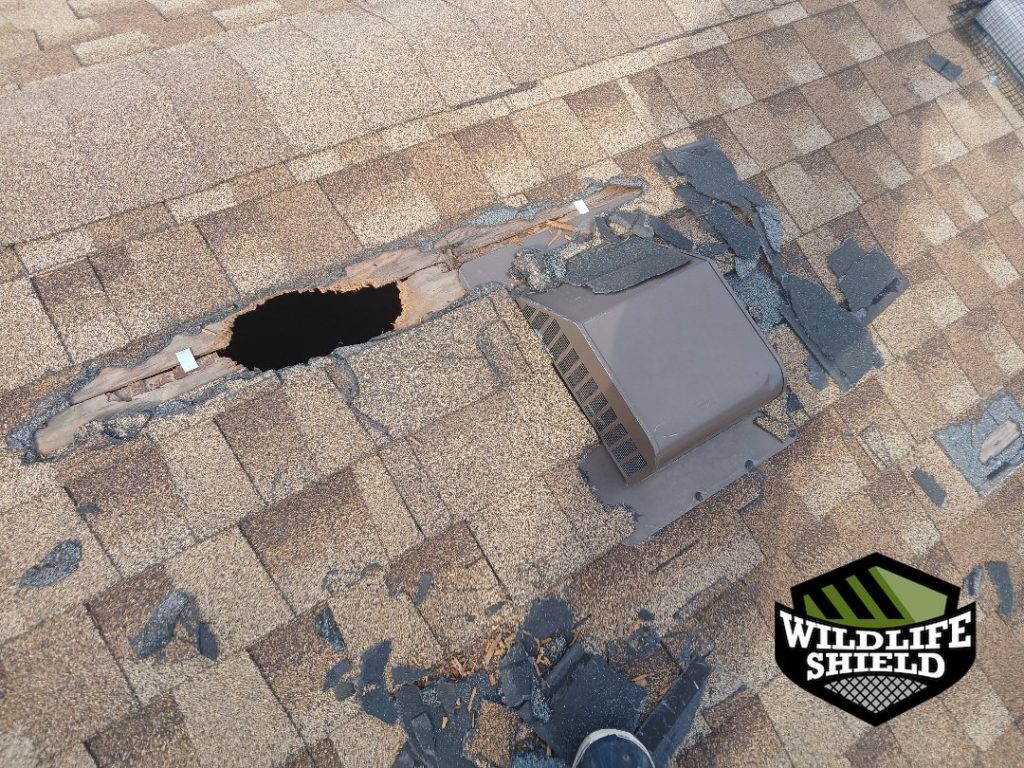
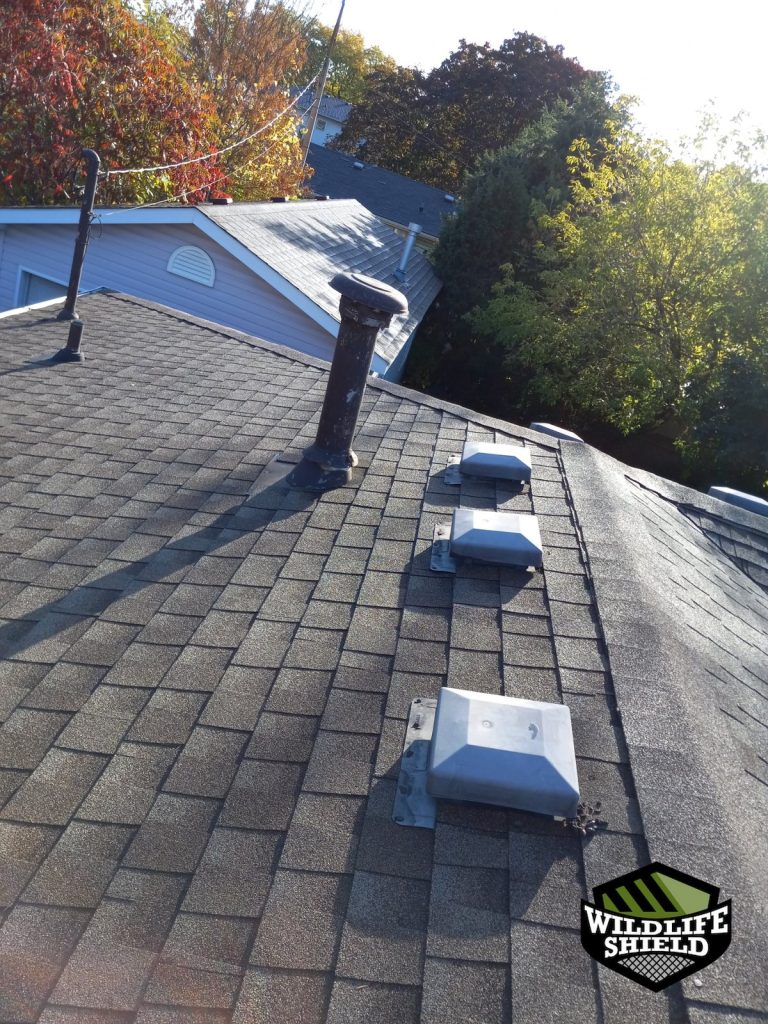
During the initial inspection, our technician identified a primary entry point at a roof vent that had been partially torn away, exposing the roof opening. Additional roof vents and wall vents were present and accessible. Photos taken during the inspection showed displaced shingles around vent bases, exposed roof decking at one location, and unsecured vent openings.
Cause Analysis
Raccoons commonly target roof vents and similar penetrations because they provide direct access into attic spaces. On this structure, multiple standard plastic vents were accessible from the roof surface, and at least one had already been compromised. Without full exclusion, remaining vents remained vulnerable to future entry attempts.
Treatment / Removal
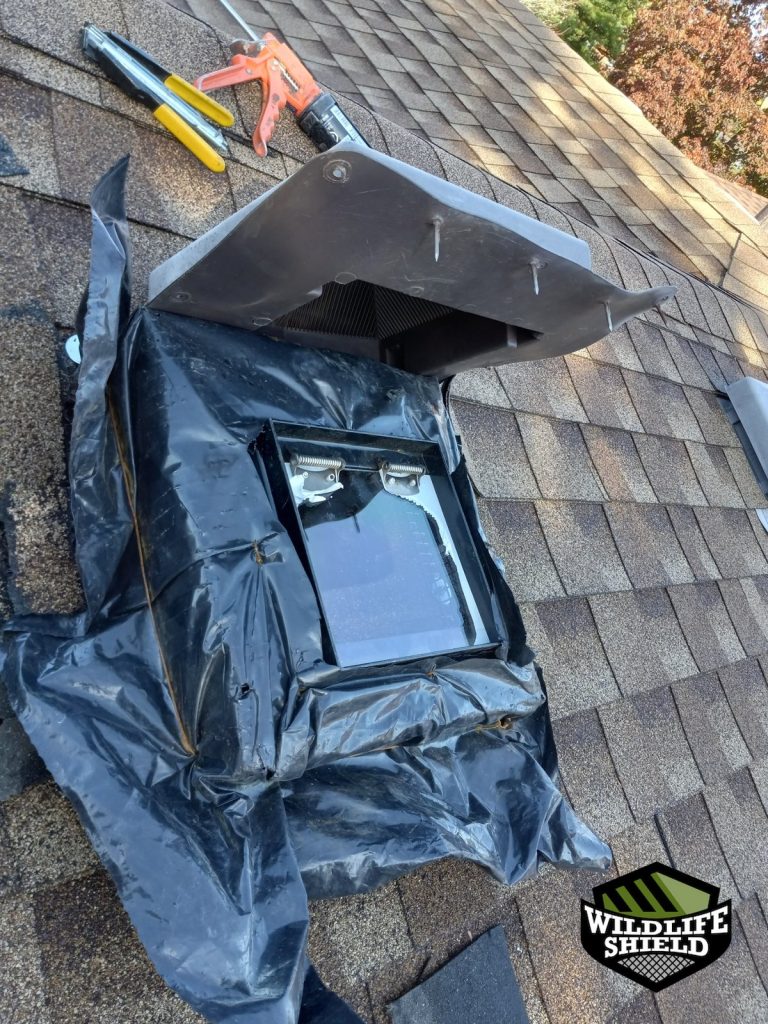
On the first visit, we installed a one-way door over the damaged roof vent to allow the raccoon to exit without re-entry. Additional roof and wall vents were proactively addressed to prevent secondary access. All work was completed using humane, non-lethal methods.
Exclusion & Repairs
Across multiple visits, the following exclusion measures were completed:
- Installation of a one-way door at the primary roof vent entry point
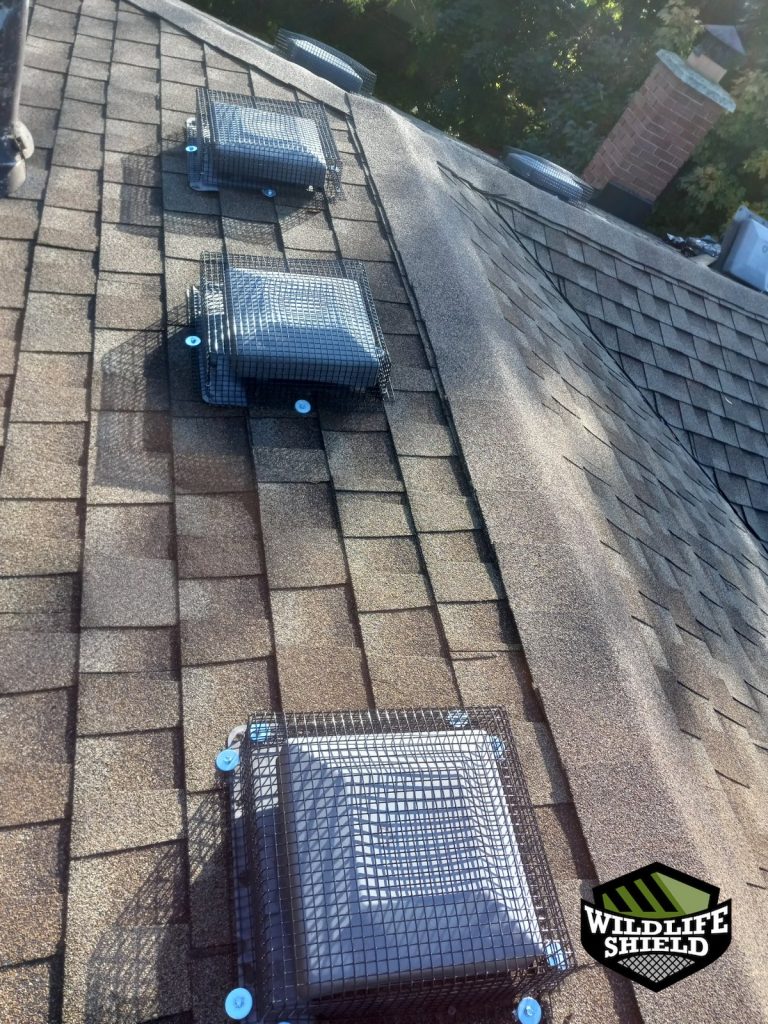
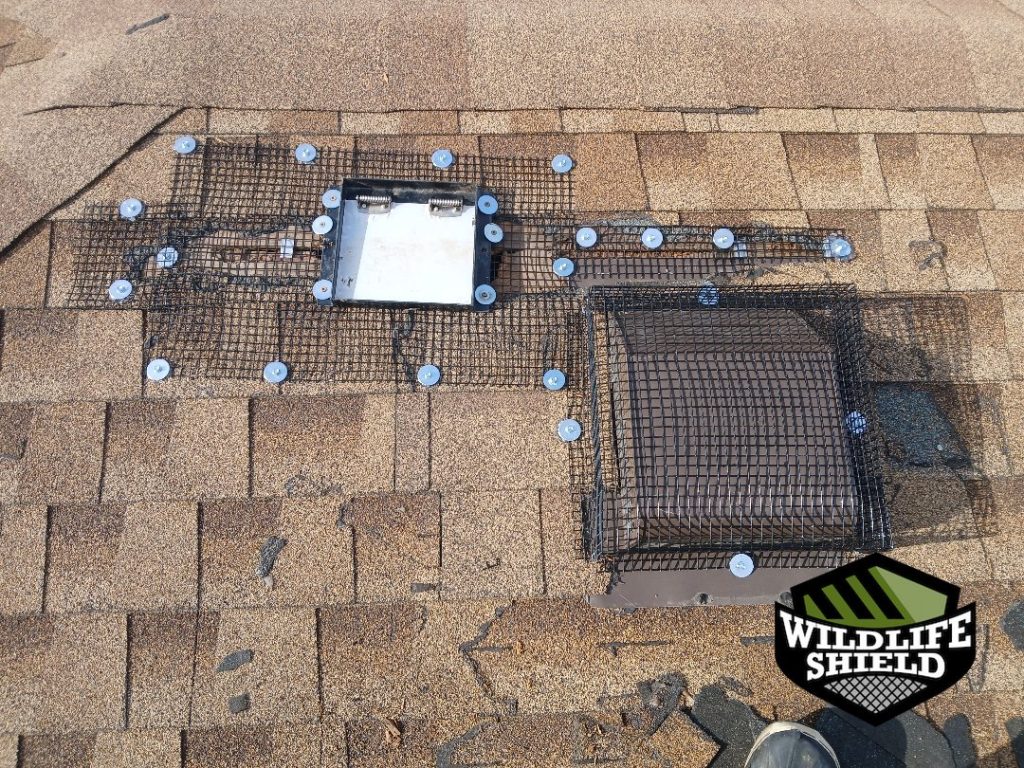
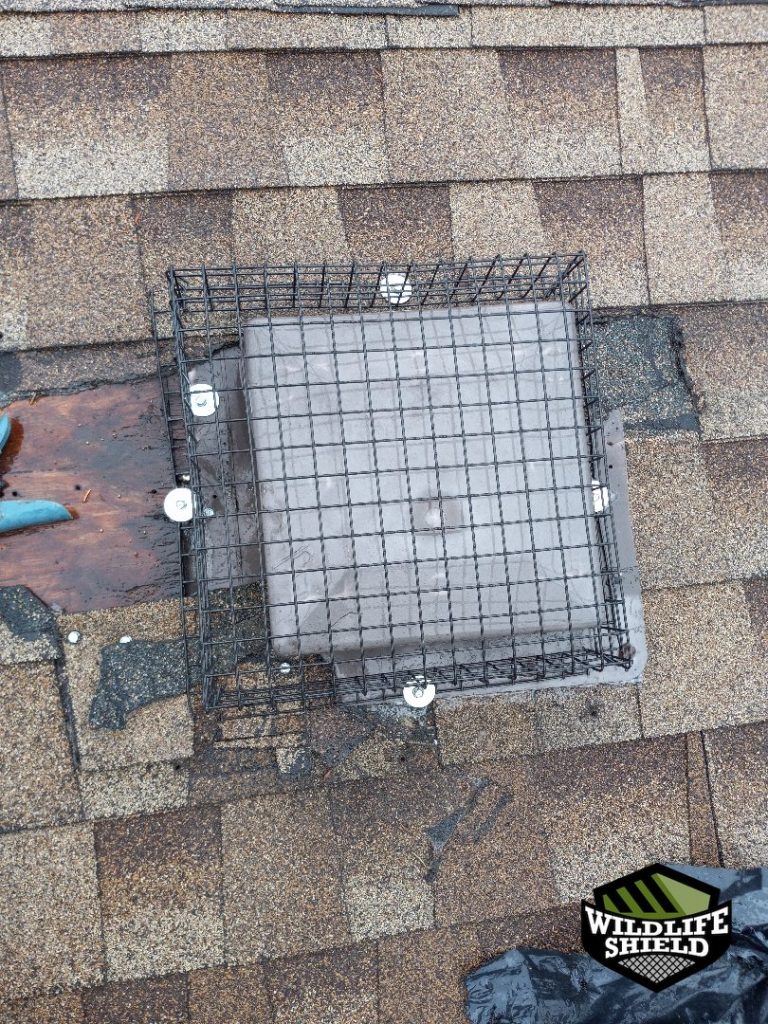
- Sealing of five additional roof vents using galvanized steel vent cages
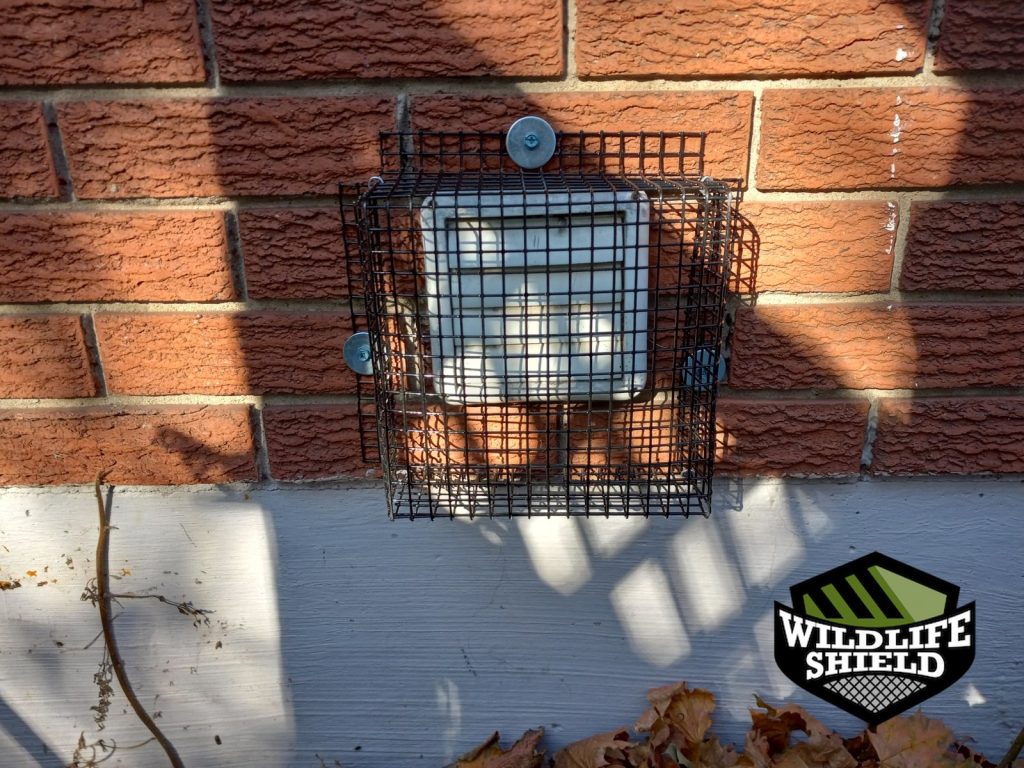
- Sealing of two accessible wall vents with galvanized steel cages
- On the return visit two years later, installation of a new one-way door at a newly compromised roof vent
- Sealing of an additional roof vent with galvanized steel mesh
- Repair of a roof opening using flashing
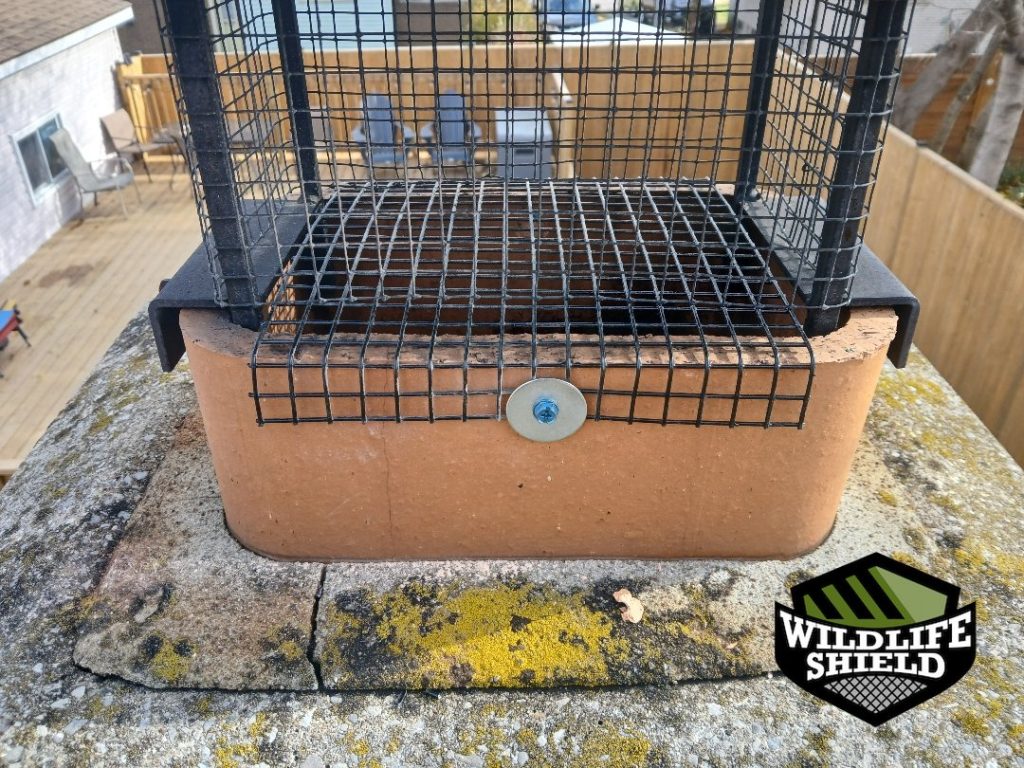
- Installation of a chimney cap constructed from galvanized steel mesh
All exclusion materials were mechanically fastened and integrated with existing roofing components to maintain function while preventing wildlife access.
Outcome & Confirmation
At the follow-up visits after each exclusion phase, the homeowner reported no further attic activity. One-way doors were removed once exit was confirmed, and all exclusion points were reinspected. After the final visit, no additional signs of raccoon activity were reported, and all identified access points were fully secured.
Technician Notes
Andrew completed all roof inspections, installations, and follow-up checks. Work was performed in December, with weather conditions allowing safe roof access. The return visit two years later confirmed the importance of sealing all potential entry points once wildlife activity is identified.
This work was completed by our Hamilton Wildlife removal team. For Wildlife removal inquiries in Hamilton, contact 905-581-9985.